
Call-out fee: $80–$180
What most Sydney plumbers charge to attend. Ask for it on the phone. Anyone who will not name it is telling you something.
Genuine round-the-clock cover across Dover Heights. You get an honest ETA rather than a flattering one, a fixed price before work starts, and on the calls that can safely wait, you get told that too.
The honest test is whether it is still getting worse while you wait. Water, waste or gas going somewhere it should not, and not stopping. A burst pipe, sewage backing up into the shower, a hot water tank emptying through the ceiling, or any smell of gas: those are emergencies, and waiting until morning multiplies the damage bill.
Then there is the category people apologise for calling about: the only toilet in the house blocked, no hot water with a newborn, a drain backing up the night before an inspection. Call anyway. An after-hours call here reaches a plumber, not a promise of one tomorrow.


The cheapest fix at 9pm is to put back what was there. On an exposed coastal property that is how the same call happens again in a few years.
Where a fitting lives outside near salt air it should be chosen for that from the start. It costs very little at the point of installation and a great deal in repeat visits.
Many post-war homes still run on original earthenware pipes prone to cracks, sags and collapses. A camera pinpoints the issue exactly.
Homes of this era were generally plumbed in copper with clay drainage, both laid well and both now decades past installation. Copper itself ages slowly; what fails is what joins it, and the flexible hoses added under sinks and vanities in later decades.
A failed flexi is the classic unattended flood, and it is also the cheapest thing in the house to have replaced before it happens. Worth doing on a quiet Saturday rather than meeting us on a wet one.
Ground close to the water holds more of it, sits lower, and moves more than ground further up. Over decades that shows up in the drainage as joints that have opened slightly, falls that have flattened, and lines that silt where they once ran clean.
Perched above the ocean, Dover Heights cops constant salt-laden wind that corrodes ageing pipework and joints. CCTV shows us where it’s failing.
None of that is an emergency by itself. It is the reason an emergency here often turns out to be the last stage of something that has been developing quietly, and why the camera run after the clear is worth more than the clear.
Steep driveways, stairs down to the door, and no clear place to park all cost minutes in daylight and more after dark.
Steep streets falling toward the cliffs move stormwater fast, and blocked pits overflow in heavy rain. We clear them and keep them flowing.
It helps enormously if someone can meet the crew at the street with a light on. And if your property has a hard access point — a locked side gate, a shared drive, a set of steps that is the only way in — tell us on the phone rather than when we arrive. It changes what comes off the van and how.
If it is happening right now: stay out of moving water, lift what you can off the floor of the garage, and clear any grate you can reach safely from dry ground. Do not lift a surcharging pit lid — the water underneath is moving faster than it looks.
Once the rain stops, the pit that overflowed usually has a reason, and it is rarely the rain. Silt, roots or a collapsed section will do it, and the difference matters because one of those is a clean-out and the others are a repair.
Stop using water anywhere in the house. Every flush, every sink and especially the washing machine adds to whatever is already sitting in the line, and a machine mid-cycle is the single most common way a slow backup becomes a floor to mop.
Established gardens and street trees send roots into cracked clay sewer lines, a common cause of blockages here.
If there is an overflow gully outside and it is running, that is the system doing its job and keeping it out of the house. Leave it clear and let it work until we arrive.
Dover Heights sits high on the clifftops above the Pacific (postcode 2030), an exposed, breezy suburb of family homes bordering Rose Bay, Vaucluse and Bondi. Salt air, sea winds and sloping streets take their toll on drains, and we know the local pipework well.
Salt air shortens the life of everything metal on the outside of a house: tap spindles, external copper, hot water casings and the fixings holding them up. It is slow and even rather than dramatic, which is exactly why it tends to be noticed all at once.
The emergency version is usually an external fitting letting go. Isolating at the meter stops it immediately, and the replacement should be specified for the environment rather than like-for-like.
What most Sydney plumbers charge to attend. Ask for it on the phone. Anyone who will not name it is telling you something.
Against roughly $120–$160 in business hours. Nights, weekends and public holidays sit at the top of the range.
Call-out, the first stretch of labour and minor parts, for the common jobs: an isolated burst, a blocked toilet, a failed valve.
Slab leaks, gas line faults and anything needing walls opened at 2am climb quickly. You hear the number before we start, not after.
If it can genuinely hold, isolated, contained, water off, we will say so on the phone and book you at daylight rates instead.
These are market ranges, not our quote. You hear your number first and decide with it in front of you. Figures here are indicative of the 2026 Sydney market rather than a quote from us, you get your own number as a fixed price before any work starts.
Describe what it is doing. Most faults can be narrowed down from the description alone, including the ones that turn out not to need a van tonight.
The crew covering Dover Heights carries what after-hours faults actually need, because nothing is open at midnight to fetch a part from.
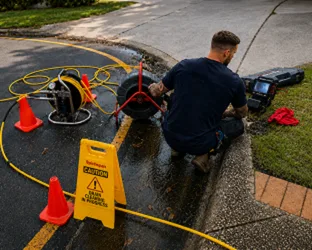
Isolate and contain before anything else, then diagnose properly and put a fixed number in front of you.

Repaired on the spot where possible, tested before we go, and the site left clean rather than mid-job.
Leave your details and an on-call plumber rings back. You will get instructions on what to isolate before anything else.
Call for the fastest response, any hour. Or send the form, after-hours enquiries get a callback from the on-call plumber, not an inbox.

Leave your details and our local Dover Heights team will call you back fast.